


PCR, DNA Analysis & Molecular Diagnostics
Engineering Rapid Thermal Cycling without Sacrificing Uniformity
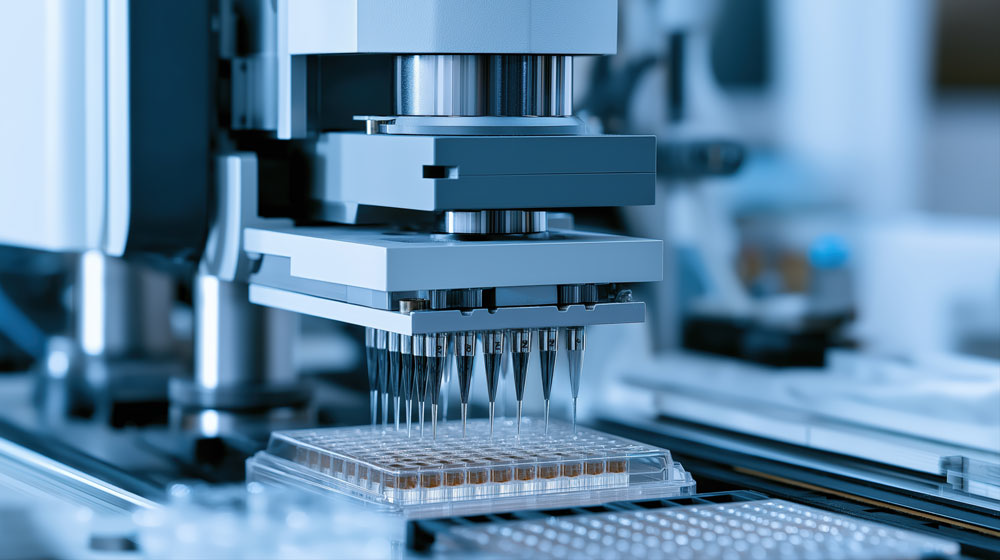
PCR and other temperature-sensitive molecular processes can be a particularly demanding thermal problem. The system may need to move rapidly between several temperatures while keeping hundreds of sample locations operating within a very narrow thermal range.
Faster ramp rates can shorten test cycles. But speed has little value if wells at different positions experience different temperatures. Thermal response and temperature uniformity have to be engineered together so that power distribution is engineered around what is happening thermally across the application.
Case in Point
For one high-density DNA analysis application, Heatron developed a HEATFLEX polyimide heater for a 384-well block requiring rapid thermal cycling. The design used distributed wattage with integrated sensing and controls to achieve temperature uniformity of ±0.5°C while supporting ramp rates as fast as ±3.0°C per second.
This kind of application demonstrates why heater geometry matters. Instead of applying identical watt density everywhere, an etched heating circuit can be engineered around the thermal behavior of the assembly. Areas that lose more heat can receive additional wattage. Areas prone to higher temperatures can receive less. Circuit patterns can be developed around wells, mounting points, edges and other features that influence heat transfer.
For molecular diagnostic equipment, Heatron engineers may evaluate:
- Ramp rate
- Temperature uniformity
- Thermal mass
- Watt-density distribution
- Sensor location
- Heater registration
- Heat loss at edges and interfaces
- Adhesive performance vs. direct bonding
These variables, along with repeatability over thousands of cycles and mechanical integration, determine whether the thermal system can support the speed and repeatability the diagnostic process requires.