


Frequently Asked Questions About Medical Device Heating
Common Questions
What types of heaters are used in medical devices?
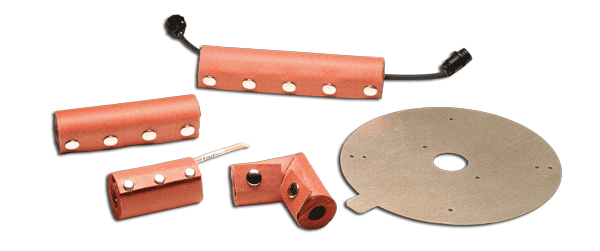
Medical devices may use flexible polyimide or silicone rubber heaters, cartridge heaters, thick-film heaters or integrated thermal assemblies. The right technology depends on operating temperature, response time, watt density, geometry, uniformity, heat-transfer method, sensing requirements and available space.
Why is temperature uniformity important in medical diagnostic equipment?
Temperature variation can affect chemical reactions, biological processes, incubation and measurement repeatability. PCR and molecular diagnostics need consistent conditions across samples; uniformity can matter as much as rapid heating and cooling.
How can heater design improve thermal uniformity?
Engineers can vary circuit geometry and watt density to compensate for heat losses, then optimize substrate materials, heater placement, sensor location, insulation and mechanical interfaces.
What is distributed watt density?
It is the intentional variation of heat generation across different areas. Localized zones provide more heat where needed and less elsewhere, supporting highly uniform thermal performance.
Can heaters include sensors and temperature controls?
Yes. Sensors, thermostats, over-temperature protection and control functions can be incorporated or integrated. The configuration depends on the application and the OEM control architecture.
When should a medical-device engineer involve Heatron?
Whenever thermal behavior affects product performance—from concept development and detailed engineering through prototyping, testing, validation or redesign. Heatron works within the existing development process.
Bring Us Your Application
Talk with a Heatron engineer about your medical application and its thermal requirements.