


Diagnostic Instruments
Faster Testing Demands More Rigorous Thermal Design
Medical diagnostic equipment continues to move toward faster results, higher throughput, greater automation, and smaller instrument footprints. Those objectives put considerable demands on the thermal system.
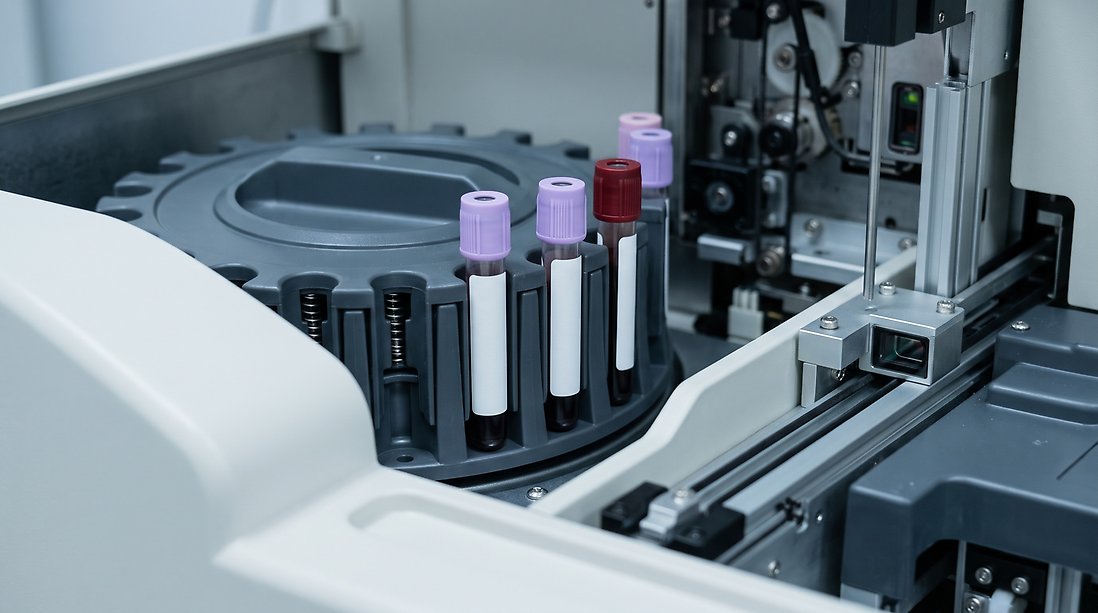
Blood analyzers, electrolyte analyzers, molecular diagnostic instruments and other in-vitro diagnostic equipment may need to heat samples or reagents rapidly, maintain tightly controlled temperatures during analysis, and recover quickly enough to repeat the process hundreds or thousands of times.
Speed alone is not enough. Increasing heater power can reduce warm-up time, but excessive watt density can create localized hot spots. Adding thermal mass may improve temperature stability, but slow response. Moving a sensor closer to the heater can make the heater appear well controlled while the sample itself remains at a different temperature.
How This Looks in Action
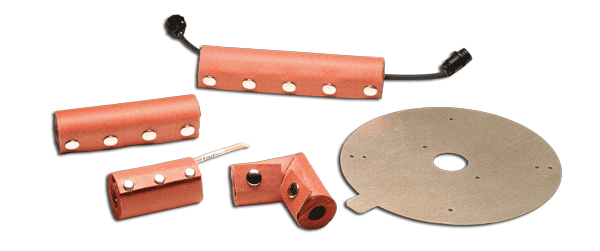
The thermal design has to balance those variables around the actual measurement process. Heatron has engineered flexible heating systems for blood-analysis equipment in which distributed watt density was used to create a uniform, consistent surface temperature while controlled rapid heating helped maximize test speed and throughput. The heater was integrated with anodized plates, and the design also eliminated a quality test from the customer’s manufacturing process.
Heatron has also supported automated electrolyte analysis equipment capable of whole-blood analysis in less than 40 seconds and throughput of up to 475 tests per hour. The application used a HEATFLEX polyimide heater within a self-monitoring system designed around accurate, repeatable temperature control.
These examples illustrate an important point:
The heater is part of the instrument’s performance architecture.
When test speed, measurement accuracy, and throughput depend on temperature, thermal behavior becomes part of the product’s ability to differentiate itself.
- Medical diagnostic applications can include:
- Blood and chemistry analyzers
- Electrolyte analyzers
- Molecular diagnostic equipment
- In-vitro diagnostic systems
- Automated clinical analyzers
- Incubation systems
- Point-of-care equipment
- Reagent and sample heating systems